Manifest Climate: Turning a decade of climate consulting into software
Summary
Manifest Climate is a corporate sustainability consultancy that transitioned into a SaaS company. The platform helps companies understand how their public climate disclosures hold up against regulatory frameworks, act on the gaps, and improve their climate-related operations.
I joined as the founding UX designer and helped turn a decade of consulting expertise into software that now serves hundreds of companies, including the Investor Agenda’s benchmark of 220+ of the world’s largest investors.
Impact
87.5% time saved on peer benchmarking
What took analysts 80 hours now takes 10
220+ of the world’s largest investors benchmarked
on Manifest Climate by the Investor Agenda
Challenge
The work was real, but the model didn’t scale.
Joining right as they were completing the SaaS pilot program, I got to witness the old process. Climate analysts were running 20+ page assessments in Google Docs. It was a tedious process for the analysts, and clients had to wait weeks to receive their report.
To grow, Manifest Climate needed to turn their expertise into software that a sustainability lead, often a team of one defending climate work to skeptical executives, could use directly.
Research
Looking through the lense of a sustainability lead
Based on the data collected by the consultants, we categorized the different questions a corporate sustainability lead would want answered. These categories then became the core pillars of the product.
- Assess: Compare disclosures against the company’s actual climate practices
- Plan: Prioritize gaps and benchmark against peers
- Learn: Curated content scoped to each action
Assess
- Where does my organization stand in our sector?
- Are we doing what we’re saying that we’re doing on our disclosures?
Plan
- What are the to-dos that cost the lowest effort?
- What are my peers and sector leaders doing?
- Do we want to be sector leaders, or do we just want to be on par with our peers?
- What are the incremental operational steps we can take to improve our standing?
Learn
- What information is needed for me to initiate operational changes?
- What are the current trends in my sector, that I have to consider for short & long term roadmap?
I designed across all three pillars, with the deepest work in Assess and Plan.
Measuring what you do, not just what you say
A company's climate maturity isn't just about how much they cover, but how well they do it. A user who disclosed more than they did was at greenwashing risk. A user who did more than they disclosed had quick wins to surface. A user doing little but doing it well had room to grow.
Making this diagnosis visible to users, and to point them toward what came next were keys that informed the designs.
Here's an interactive chart that illustrates the framework that informed the design decisions.
Position map
Diagnosis
Your public disclosure claims more than your initiatives currently deliver.
Solutions
To improve, you must first know where you stand.
Users began their journey by getting a full picture of their company’s standing. There were two parts to this: disclosure assessment, and the climate profile questionnaire.
The questionnaire was dense and lengthy– there was no way around it, as the user input would be mapped 1:1 to the disclosure frameworks so we could accurately assess them.
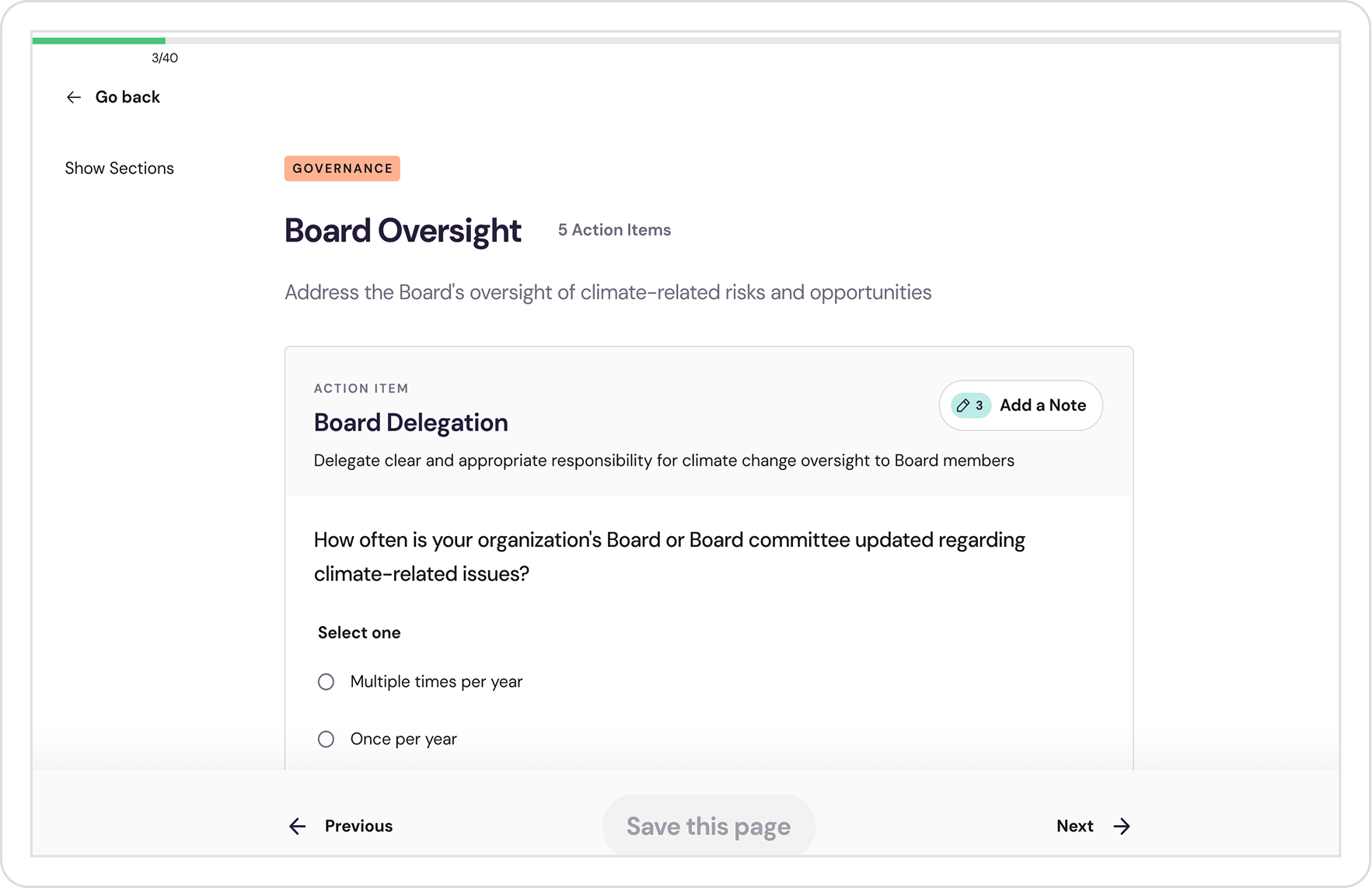
So reducing completion friction was key. Climate Profile was designed with visible progress tracking (not started, partially filled, complete), and only presenting a single section on the page at a time, so that the user is free to fill each sections at their own pace.
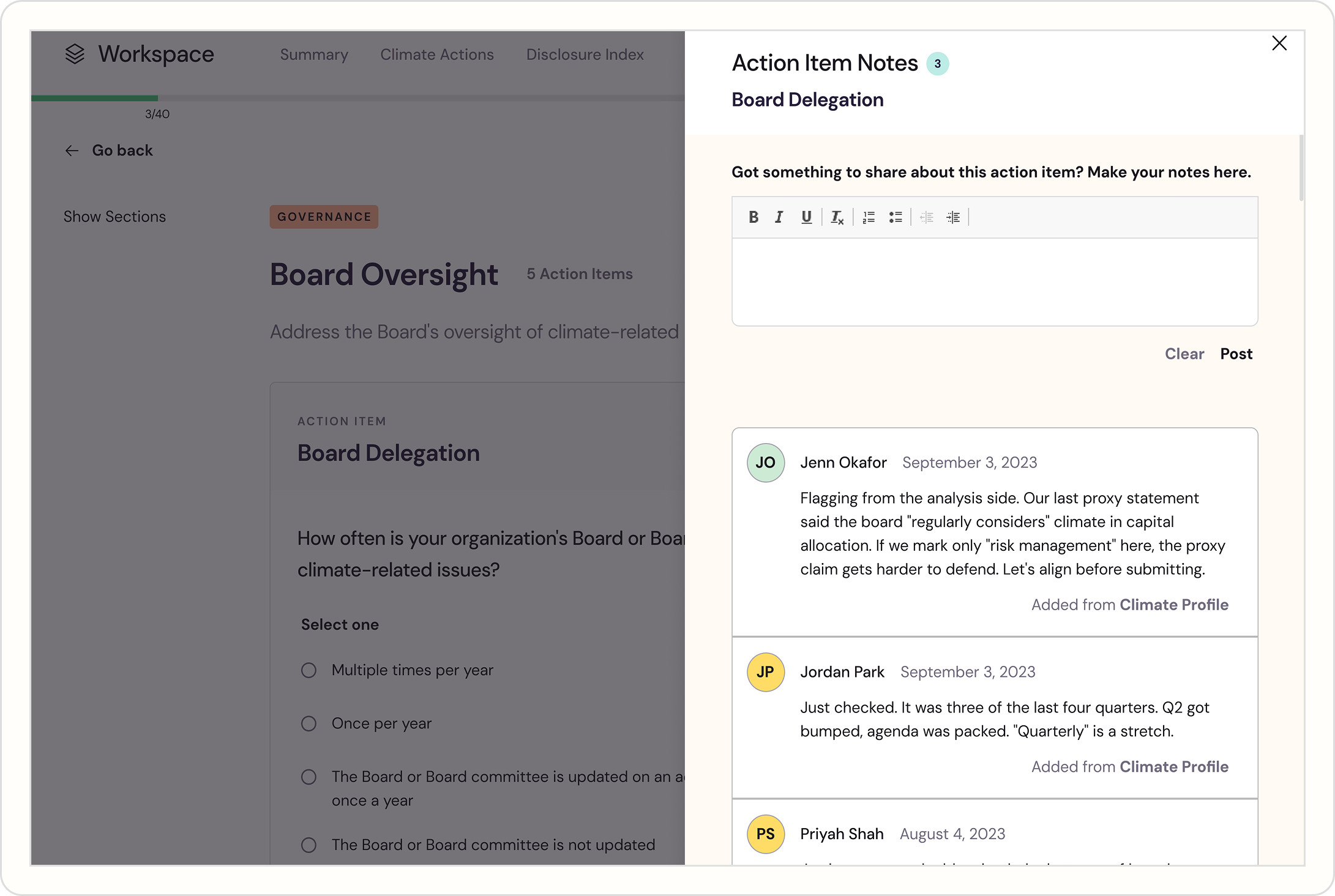
Inter-department collaboration tool was baked into the questionnaire, so multiple users from the same organization could work together towards completion.
Good is abstract. Until you see it next to your own.
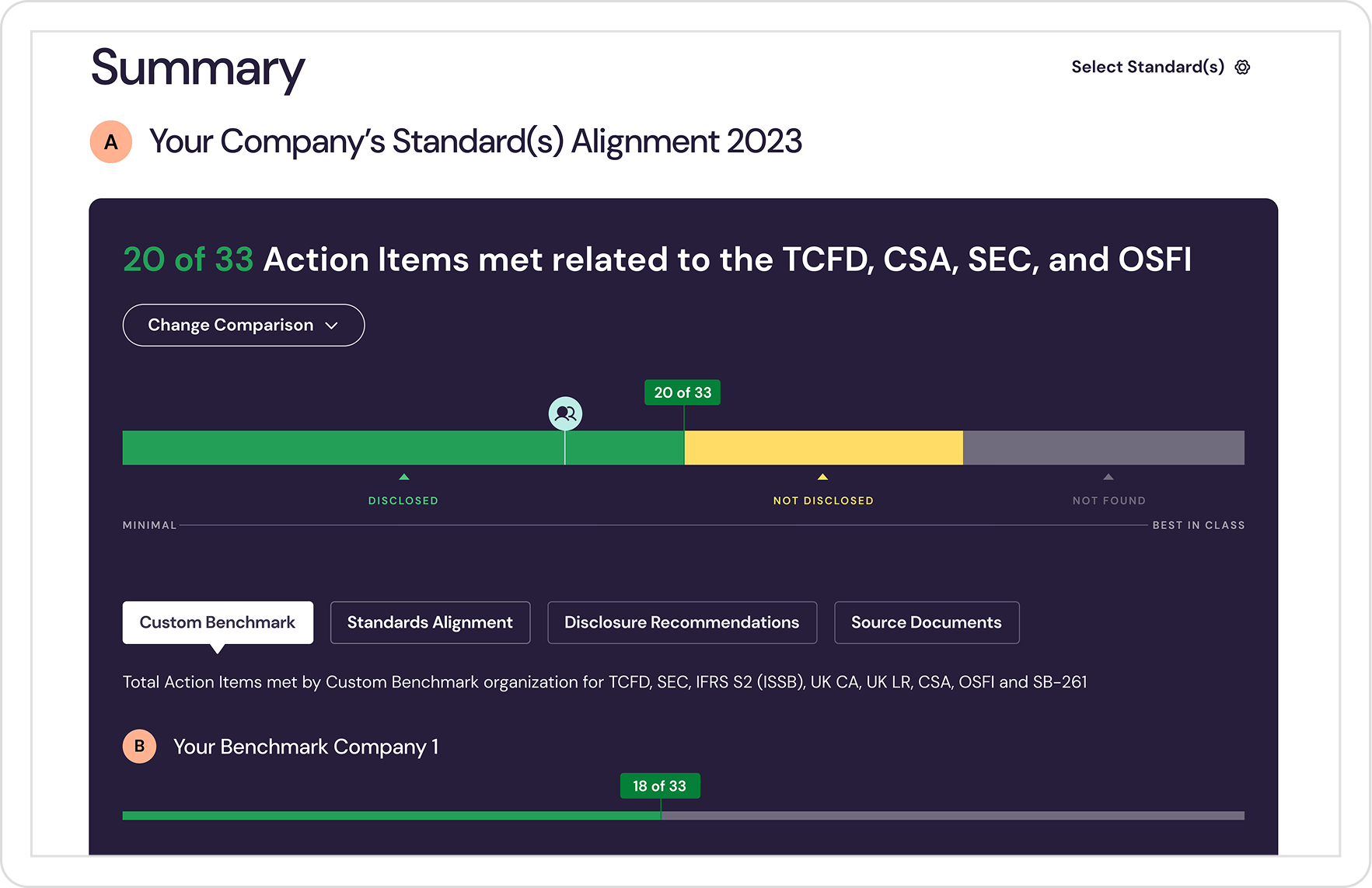
With the two pieces combined, users were then able to access the full assessment result, with detailed insight on where their organization stands compared to their peers, and their sector leaders.
Turning insights into actions
Within the full assessment, each finding opened to a detail page.
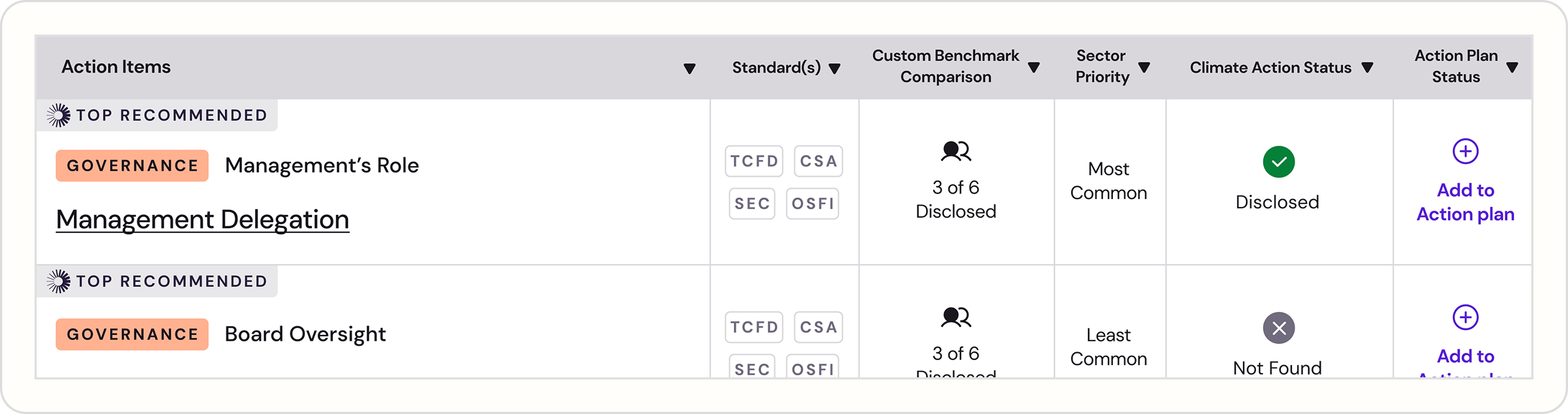
From there, users could prioritize each finding as now, soon, or later, building their own climate action plan directly in the platform. Owned by them, not handed down from a consultant.
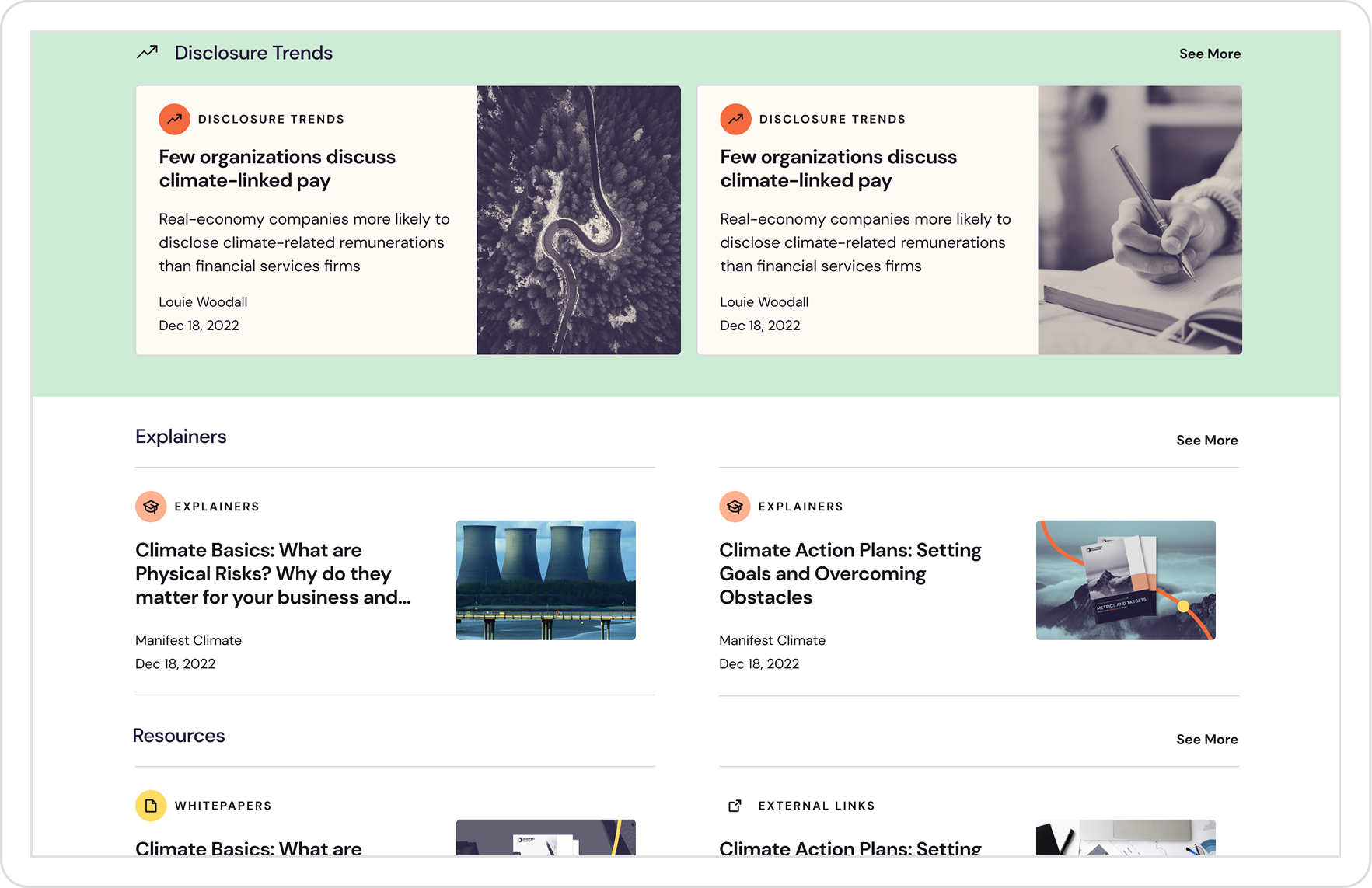
The same detail page also surfaced learning content curated to that specific recommendation, drawn from a separate Learning Hub managed by our climate analysts.
Rather than asking users to leave the platform to find supporting research, the right content met them where they were already working. The principle: bring learning to the moment of action, not the other way around.
Impact
Where the work landed in the wild
87.5% time saved on peer benchmarking
What took analysts 80 hours now takes 10
220+ of the world’s largest investors benchmarked
on Manifest Climate by the Investor Agenda
“Manifest gives our team a defensible way to benchmark disclosures, identify gaps, and prepare for evolving regulatory expectations. What used to take weeks of manual review now happens in-house, with evidence we can stand behind.”
Head of Climate Risk, Leading global technology company
IXD Year End Show
Branding the Year End Show for Sheridan College’s Interaction Design program